Showing posts with label tips. Show all posts

Cyberflanerie: James McGrath Morris, Mexican Baby Jesus, Maps, Tiles Stoves, Hang, The Umbrella Man


James McGrath Morris's "Type A" Column for the Santa Fe New Mexican, including E-books: the legerdemain of tomorrow?

Morris also has a new book out, Eye on the Struggle: Ethel Payne, First Lady of the Black Press

Check out the book's trailerit's well worth watching (especially for the bit about President Eisenhower.)

And check out his article about writing this biography, "Reporting Across the Color Line," in The Daily Beast.


Mexican Baby Jesus in the "Mexico Cooks!" blog. (No worries, BJ does not get broiled.)


Interesting Low-Techerie: Tiled Stoves 

From ye olde soundworks category: Hang: A New Instrument 

Utterly fascinating op-doc: The Umbrella Man 


>More Madam Mayo Cyberflanerie

>Your COMMENTS are always welcome.

"Resources for Writers" Updated, Expanded, and Reorganized

It's now going into its 16th year, this ever-growing cornucopia of the webpage I maintain for my writing students and anyone else interested in creative writing.

This April 18th at the Writer's Center just outside Washington DC, I'll be offering a one day only workshop on Literary Travel Writing; apropos of that I have given ye olde Resources for Writers webpage a spring cleaning, updating links, scrubbing the dead ones, adding fresh yummies, and organizing said resources into the following categories, each with its own page:


The home page for all this, FOR CREATIVE WRITERS, also includes


>> Your COMMENTS are always welcome.

Six Momentous Digital Developments, 5 Ways I (Attempt to) Cope... and "The Money Tree"

As a writer, six of the most momentous things that have happened for me in recent years are all digital:


(1) Websites (with my dad's help, www.cmmayo.com, launched in 1998); 
(2) Blogs (ye olde Madam Mayo first appeared thanks to www.blogger.com in March 2006); 
(3) Podcasts (I started making podcasts in 2009, using GarageBand to edit the audio files and podomatic.com as my hosting platform which, total yeehaw, sends feed to iTunes); 
(4) YouTube and Apple's iMovie software (check out my videos here and a book trailer);
(5) Ebooks (my ebooks are all listed here and a blog post about how I made some of them is here).
(6) Print-on-demand publishing (FAQs answered here).

But then the digital tsunami crashed upon us all, and like most writers (and most readers), after adding Facebook and Twitter and Skype and etc etc to the churning morass of email, I struggle to keep my nose above the waterline. 

I also despair in how often I share a lunch or dinner table with individuals who dodge out of the conversation to take calls, scroll through their email, text, show photos of their latest vacation trophy photos and/or urgently google whatever term / name / place that pops into their head. I don't have kids but if I did, at dinnertime, I would oblige them to deposit their thingies in a basket outside the door. Else crack ye olde buggy whip over their heads, I guess. Many adults, alas, set an atrocious example. Politicians are the worst (yes, I know some). Don't get me started.

Five ways I cope (which may not work for everyone, but they do for me, so maybe also for some of you):
(1) I don't use a cell phone except when traveling (I tell everyone who asks for my cell #, twist my arm and I'll give you the number but I never check my voice mail, so it's much better send me an email-- that I answer).
(2) I do not text (really, I don't).
(3) For organizing my schedule, shopping lists and tasks, I use a Filofax personal organizer and the GTD system. I wrote a piece about the Filofax for Kevin Kelley's Cool Tools blog a while ago, arguing that, though it's a paper-based system, it can be a powerful tool to not only organize one's life but also to help loosen the digital leash. Seems that carefully made point about loosening the digital leash just sailed, weeee, over most commenters' heads. Oh well!
(4) I rely on my writing assistants to distract me from anything digital (watch them in action in this 14 second video).
(5) For lunch, coffee breaks, dinners when alone or with others who may feel compelled to take phone calls and/or thumb-twiddle under the tablecloth, I keep a paperback handy. Right now it's The Indians of Texas by W.W. Newcomb, Jr. I'm up to page 103, "The Lipan Apaches: Conquerors Dispossessed."

I cannot say I have arrived at Total Zen in the Digital Department, but at least I've managed to conserve enough old-fashioned awareness that I am confident I would have noticed the Money Tree! Watch this short video by Amy Krouse Rosenthal, which is sort of sadly hilarious.


Screenshot (partial) from
Amy Krouse Rosenthal's "The Money Tree"

Bottom line: Digital tools are like chainsaws, rip-roaring powerful, but dangerous-- the amputation just might be a limb of your own life. 

Glad to have digital tools. But sometimes I am massively relieved not have them. What will the next years bring? I dread-thrill to wonder.

Your COMMENTS are always welcome.


Writers Tool: StandStand the Portable Standing Desk

Hat tip to Swiss Miss: I am so psyched to learn about this Kickstarter project, the StandStand portable standing desk, because it looks like exactly what I need-- but at a fraction of the cost offered elsewhere. Plus, it's portable. I ordered the bamboo model, and fingers crossed, I'll be able to start using it in December.

The thing is, as a writer, I spent way too much time sitting down. Specifically, I'd like the option of being able to do email while standing (and maybe even hopping around some). Yes, I could balance the laptop on a cardboard box or a stack of books, but that's bulky, awkward, and definitely not easily portable.


+ + + + + + + +

SURF ON

+  My Uncool "Cool Tool": Grandma's Recipe Box for Internet Password Management
+ Why I am a Mega Fan of the Filofax
+ Guest-blogger Regina Leeds on 5 + 1 resources to Make  Writer Happy in an Organized Space
+ On Decluttering Your Writing
+ FOR CREATIVE WRITERS page over at www.cmmayo.com

12 Tips for Summer Day Hiking in the Desert (How to Stay Cool and Avoid Actinic Keratosis, Blood, and Killer Bees)

C'est moi on (whew) August 30, 2014 at Meyers Spring,
an important rock art site of the Lower Pecos,
on the US-Mexico border near Dryden, Texas. 

As you can see, in my left hand, I am carrying a 
white umbrella. So I didn't need the hat, and that black 
backpack wasn't the best idea. I also should have worn a 
lightweight bandana. Oh, and more sunblock. 
Always more sunblock.
Just returned from hiking with the Rock Art Foundation in to see the spectacular rock art at Meyers Spring in the Lower Pecos of Far West Texas (yes, there will be a podcast in the Marfa Mondays Podcasting Project, in which I exploring the Big Bend & Beyond in 24 podcasts. More about that anon). 

I got a few things very right on this trip and a few things, well, I could have done better. Herewith, for you dear reader, and for me-- this will serve as my own checklist for the next rock art foray-- 12 tips for summer day hiking in the desert:


1. Don't just bring water, lots of water, more water than you think you can possibly drink-- bring it cold and keep it cold.
Everest Lumbar Waist Pack

Of course, not drinking enough water can be seriously dangerous. But warm water when it's this hot is just bleh--and if you're carrying a plain old plastic water bottle in your hand, out here, boy howdy, it gets hot fast. (Last year, I hiked this way over Burro Mesa in the Big Bend National Park. Six hours. Head-slapper.) The thing is, you don't just want to hydrate; you want to keep your core from overheating, so every swig of cold water really helps. Before heading out, fill your insulated water bottles with lots of ice. In your car, keep them in an ice chest or, if that's not possible, wrapped in a blanket, or whatever's handy, until the moment you have to take them out. I did this for the first time, and wow, what a difference. 
> Recommended: Camelback lightweight insulated water bottle
> Recommended: Everest lumbar waist pack that holds two bottles (and carry a third in-hand).
(What works for you? Suggestions welcome.)

2. Slather on the sunblock.

Yes, sun block stinks and feels gross, but if you're like me -- a descendant of those who once roamed the foggy forests of England, Ireland and Scotland-- if you don't, you may end up helping your dermatologist buy his ski condo. And no, he probably won't invite you.
> Watch this fun video, "How the Sun Sees You."


> For those with actinic keratosis (that's the fancy term for seriously sun-damaged skin), try Perrin's Blend. If that doesn't work, off to the dermatologist you must go. 

> Here's how a bald guy, Tony Overbay, dealt with actinic keratosis using the latest in dermatologist-recommended chemotherapy (uyy, I am hoping my Perrin's Blend works…)
>Recommended: Whole Foods article on how to choose the best sunscreen.

3. Wear a long sleeved white collared shirt.

This protects you against the sun, keeps you cool (the white reflects the sun), protects you from bug bites and scratches. Light clothes always beat dark! Flip the collar up to protect your neck. About scratches: the desert tends to be filled with cactus and thorny scrub. 

4. Knot a light-colored scarf around your throat.

This protects you from the sun. A bandana works fine. Mike Clelland (more about the guru in a moment) suggests cutting the bandana in two, so it's lighter. Porquoi pas? I didn't do this. Alas. Bring on the Perrin's.

5. Wear tough but lightweight trekking trousers.
For the same reason you want to wear the long-sleeved white shirt: trousers protect your body parts, in this case, calves and knees, from sun, scratches, and bugs. Do not wear shorts unless, for some reason you probably should be working on with your psychiatrist, you don't mind scarring and blood. And do not wear jeans. I repeat, do not wear jeans. 
> Recommended: Northface trekking convertible trousers. I wore these on the trip. Very comfortable.


6. Keep your pack as light as possible, in both senses.
Hey, you've not only gotta stay cool, but you've gotta hump all that water! 

A few specifics:
> Use a lightweight pack and carry it on 
your hips, rather than the flat of your back (see photo of lumbar waist pack above). This helps keep your back cool. But I don't speak from experience on this one: I'm going to try this for next time.
> Carry lightweight insulated water bottles.
> Ditch the hat and ditch the heavy hiking boots (more about that below. There are, of course, other places and times when a hat and hiking books would be advisable).
> Skip the camera or use a lightweight camera (I use my iPhone).
> Eat a light breakfast and bring only a little food-- since this is a day hike, you can eat a big dinner when you get back. But you will need sustenance on the trail. I recommend date, fruit and nut bars-- love those Lara bars-- that is, food that is high in energy but won't spoil in the heat, and that doesn't require any dishes or utensils. Don't bring anything with chocolate in it. (I brought a Snicker's bar. Ooey... gooey.)
>Bring a white plastic grocery bag and use it to cover your pack. Two advantages: the white reflects sunlight and keeps it cooler than, say, an unprotected black or other dark-colored pack, and, in case of rain, will help keep it dry. 

> Highly recommended: Mike Clelland's Ultralight Backpackin' Tips, a superb resource for keeping it lighter-than-light, yet making sure to bring what you need for comfort and safety. 
> And be sure to visit Clelland's blog for many helpful videos and more.

7. Watch out for killer bees!

Seriously, Africanized bees have arrived in some desert locales north of the Mexican border. What do bees want? Sweet things and water. So don't carry around open cans or bottles or suddenly pick up open cans or bottles-- bees may smell the water or soft drink from afar, crawl inside, and then, if you do anything they don't like, such as pick up that can, they will go bezerk, and call in their buddies who will also go bezerk and might sting you hundreds of times. No kidding, people and animals have died from killer bee attacks. So be especially careful around any blooming plants where bees might be feeding. Ditto any open water, such as a tank, spring, or any puddle. And whatever you do, if you see a hive, don't go anywhere near it. Normal honey bees, however, are not a problem. Unless you have a severe allergy, a few stings might actually be good for you! (Read more about bee sting therapy on the Apitherapy Association webpage). Your real problem is, it's hard to tell the killers from the honeys until they attack. 

8. Wear gaiters.

www.dirtygirlgaiters.com
I followed Mike Clelland's tip and bought a pair from Dirty Girl Gaiters (they're for guys, too). They weigh about as much as a feather, they're easy to attach to your lace-up running shoes and indeed, they keep the dust out. Their biggest advantage is that you can therefore avoid wearing those ankle-high and heavy hiking boots. You'll exert yourself less and therefore, on the margin, stay cooler. (I'll admit however that on this last hike, a loose ball of bubble-gum cactus went right through the gaiters and stabbed me in the ankle. Oh well!)

9. Forget the hat and trekking pole; use a white umbrella.

Really! Who cares if it looks nerdy? It's nerdier to pass out from  heat stroke or end up looking like a tomato. So let those guys in jeans, black T-shirts, and baseball caps cackle all they want, as they sweat & burn & chafe. The white umbrella protects you from sun and the rain and-- crucially-- helps keep your head cool. A hat will trap heat on your head-- not what you want out here. Plus, in a tight spot, you can also use the umbrella as a trekking pole. Added bonus: scares mountain lions. I would think. Don't take my word for that, however. Also good, once folded, to toss a rattlesnake or tarantula. Not that I've had to do that, either. Just saying.

Not for National Geographic, but
thanks, iPhone camera app
10. To avoid chafing, first apply an anti-chafe roll-on or cream.
Fortunately for me, I don't have this problem, but a lot of people do. Why suffer?

11.  Take it slow and rest often.
In shade, if possible. (Oh, right, you have your umbrella!)

12. In your car, leave a reflector open on your car's dashboard and another over your stash of cold water.

If you've had to park outside, after a day of baking out in the desert, it's going to be an authentic Finnish sauna in there-- unless you use a dashboard reflector. In which case it will still be a very warm-- but far more bearable. I picked up my pair of dashboard reflectors at Walgreen's for $3.99 each and I was glad indeed that I did. Certainly you could also just use a roll of aluminum foil.

COMMENTS always welcome. And you are most welcome to join the mailing list fir my newsletter. Sign up here.


Stay tuned for the next Marfa Mondays podcast which will be about Apaches. Meantime, listen in anytime to the ones that have already been posted, including:

> Looking at Mexico in New Ways: An Interview with John Tutino

> A Spell in Chinati Hot Springs
> Mary Baxter, Painting the Big Bend
> Cynthia McAllister with the Buzz on the Bees

+ + + + + + + + 


SURF ON!


MORE ON MADAM MAYO:


> Why I am a Mega-Fan of the Filofax

> Small Mistake, Mongo Sucking Whirlpool
Guest-blogger Jennifer Silva Redmond's 5 Favorite Baja California Writers' Websites


AND OVER ON MY HOME PAGE, www.cmmayo.com:


> Mini-Travel Clips, many of the Big Bend (Hoodoos, Lajitas, along the Rio Grande, and more)

> Excerpt from Miraculous Air: Journey of a Thousand Miles through Baja California, the Other Mexico: Bay of Angels
> A Visit to Swan House (article in Cenizo Journal on Simone Swan's visionary adobe teaching house in Presidio, Texas)
> Marfa Mondays Podcasting Project: Exploring Marfa, TX & Environs in 24 Podcasts


Cyberflanerie: Cracking Open the Door to Creativity (A Few Resources)

Giant Golden Buddha & 364 More Free 5 Minute Writing Exercises

Debra Eckerling's new Kindle, Purple Pencil Adventures: Writing Prompts for Kids of All Ages

More for kids (of any age): Karen Benke's Rip the Page!
> Her guest-blog for Madam Mayo, 5 Writers on What It Takes to be a Creative Writer> Her latest book, Leap Write In!
My ever-longer list of highly recommended books on creative process/ life. 

Read interviews with accomplished writers, such as Leslie Pietrzyk.

Read even more interviews in the Paris Review.

Listen Better (Julian Treasure's TED Talk)

Follow poet, writer and creative writing teacher Zack Rogow's excellent "Advice for Writers" blog.

Get inspiration from visual artists (all links to the blog This Is Colossal)
(Whew, even your coffee will taste, like, expanded.)

+ + + + + + + + + + 

SURF ON
> My workshop page with more resources for writers and workshop schedule.

COMMENTS always welcome.


30 Deadly-Effective Ways to Free Up Bits, Drips & Gimungously Vast Swaths of Time for Writing

Where do you find the time? (Was it hiding in the crawlspace?) It’s not so much finding time as it is prying your physical presence and attention away, either permanently or for a spell, from someone, something, someplace less valuable to you—if you really do want to write, that is, not just pretend and fantasize and gripe. Herewith, 30 ideas some of which might make you shake your head, but some just might work for you. For me, most of these have always been no-brainers, but I confess, a number of them took me awhile to recognize and/or fully appreciate.

1. Give up TV. Just give it up, deep-freeze turkey & freekin' forever and oceans of time, vast and sparkling, shall spread before ye. 


2. Cut the digital leash, the crackberry, whatever you want to call that soul-sucking hypnotic thumb-twiddler. The price of this is that you must therefore continually combat tidal waves of exasperation from loved ones and others that you are not instantly and always available to them. Find the humor in this. Because really, how blazingly ridiculous.


3. No drugs. 
Duh. And I include prescription drugs here, too. Exercise, eat lots of vegetables, drink raw juice, meditate… do whatever you possibly can to avoid adult onset diabetes and joint issues and so having to take drugs, for aside from suffering from lousy side effects, you'll waste countless hours waiting for doctors to write prescriptions, then getting them filled at the pharmacy, dealing with insurance, and complications, and so on & so forth. 

4. Reduce, better yet eliminate, or at least make use of your commute. 
If you can possibly live closer to where you need to be during the day, even if you have to sell half your furniture to fit into a smaller place, do that. Otherwise, try to get into the habit of writing while commuting. I hear some people have been able to do that. I admire them genuinely.

5. No drama. Mantra: not my circus, not my monkeys. If you relish fighting / debating / gossiping because you find it entertaining, that's your writing mojo leaking like water onto the asphalt. Incessant worrying about other people's problems that are not yours to solve is also silly. You can be aware, you can be concerned, you can be compassionate, and when they are your problems, then they are your problems.


6. No ruminating over the past.  
Regrets, nostalgia, whatever, writing gets done in the now.

7. Less fantasizing about the future. 
Again, writing gets done in the now.

8. Quit nursing grudges against editors / agents / other writers / 
reviewers / readers. Oh, the injustices of the literary world! These can vacuum up untold hours with yammering in workshops, at conferences, and over sad and grumbly cups of coffee. But listen here: the so-called gatekeepers and the clueless readers and half-literate kids glued to their handheld devices, they’re just doing the best they can, too. So are the peasants wading through their rice paddies in Burma. You are luckier than a lottery-winner to even be able to write at all. So strive to always improve and write for those who appreciate what you do, knowing that, of course, even if you one day win the Nobel Prize, only the teensiest portion of the population of Planet Earth will have heard of you, never mind actually read anything you wrote. Bottom line: If you can’t stay focused on doing your own best work, you’re not writing, you’re back to ruminating.

9. Stop picking up the telephone. As Marie Antoinette might have put it, Let them send email. If you can, pay for an unlisted number and caller ID and change your telephone number at least every other year. If that little click to voice mail distracts you, why, just unplug it! And, pourquoi pas? Fling it out the window!


10. Eliminate recreational shopping, aka "retail therapy." Whew, this one adds up over a season, a year, two years. So never, ever shop in stores or on-line or in fact anywhere anytime without your list. If an item is not on your list, do not buy it. Shopping malls are time- and money-gobbling maws and believe it, the marketers, watching your every move on their cameras, are more sophisticated than you think you are. Not only does recreational shopping squander prime writing time, but it tends to fill up your house with clutter-- a time-suck in itself. Go to a park, a museum, a library, the seashore, a basketball court, have fun and refresh yourself as necessary, but stay way away from the maw. I mean, mall. 

11. Do not accumulate a large and varied wardrobe based on navy, brown and/or beige. And better yet, give all that away to Goodwill. If you wear clothing that is black and/or coordinates with black, you'll be able to make fewer shopping trips, pack faster, and do far less laundry and dry cleaning. And since black makes colors "pop," your blue sweater, say, will appear brighter. Yet another advantage: black makes you look slimmer.  (Ha, maybe I was a Jesuit in my last life.)

12. Cancel the manicure. 
Horrendous time sink there. Plus, the polish is toxic and it flakes. (Nobody notices or cares about your fingernails anyway except manicurists, I guess, and those who get manicures themselves. Last I checked, they aren't getting much writing done.)

13. Quit following the stock market on a daily basis. This is a tick-like habit that achieves nothing but a heightened sense of anxiety. On par with spectator sports.

14. Quit playing computer games. 
On par with drugs. Or any other addiction. Including following the stock market on a daily basis.

15. Reduce Facebook and Twitter time. 
Of course, these can be useful for keeping in touch and promoting one's books and events, but like Burger King, best indulged in rarely and only of dire necessity or unavoidable human frailty. Almost, but not quite on par with computer games.

16. Ignore spectator sports. 
Do not attend games, do not watch or listen to or otherwise follow games, do not discuss games, and whole weekends for writing will emerge from the sea of froth. 

17. Do not indulge in expensive, time- and space-consuming activities such as, oh, say, collecting and expounding upon various types of fermented grape juice. Come on, folks, once it goes into a carafe, 99% of your guests won't know the difference between one chablis and the next chardonnay. Pick a reasonable brand and stick with it, white and red. For me, it's Monte Xanic-- or else it goes into the pot for coq au vin.


18. No more hauling laundry. You've got to get your clothes clean so, failing a maid to do it for you, get a washer / dryer for your house or apartment. If you do not have space, if it's not allowed, or you cannot afford this, then consider a portable washer/dryer because hauling bags to the laundro-mat or down to the basement only to find the machines full, that is one woolly mammoth of a time suck. (If you're paying for each load at a landro-mat, you might find it cheaper in the long run to use your own portable washer. I wouldn't know, since I'm fortunate enough to have a washer/dryer, but a little bird told me...)


19. Never hunt for your keys / wallet / purse / cell phone. This is an easy fix. The moment you step in the door, you always, always put them in the same place, a designated hook or a bowl or a basket. This might seem minor, but those two to ten minutes of running around with your hair on fire add up.

20. Never hunt for Internet passwords (or wait for the "resend password" email). Keep track of passwords, some way, somehow. I use Grandma's recipe box-- deemed seriously uncool on the Cool Tools blog, but it works beautifully for me and, so they tell me after reading that infamous blog post, many of my friends. (So there.)

21. No boat. Do not ever even shop for a boat. Do not even think about shopping for a boat. Unless you plan to sell your house and live in the boat. Ditto RV, camping equipment, or motorcycle. And anyway, you cannot live in your motorcycle. If you like to go out overnight into nature, check out Mike Clelland’s Ultralight Backpacking Tips. (Watch out, though, he features a link to his UFO page.)


22. No second home. On par with the boat. No, worse.

23. Stop buying loads of soft drinks and bottled water. Take into account the time it takes to shop for them, carry them to the car, lug them out of the car, store them somewhere in the pantry or the fridge, then recycle the bottles and cans… Drip, drip, drip goes your time (and money). A good water filter will pay for itself and quickly.

24. Prepare your meals with mis-en-place. Even when making a peanut butter-and-jelly sandwich, it sure does help to do mis-en-place. If you hate cooking, you probably never heard of the mis. Check it out. (If you want to keep it easy by microwaving everything or relying on take-out, see #3 above.) 


25. Take email seriously. In other words, stop letting it pile up and become a giant, throbbing source of lost opportunities, embarrassment and guilt. 
Email is vital for a writer-- as vital as letter writing in days of yore, so do it well. This also means get quick-on-the-draw to delete spam.
 > My Super Simple Tally-trick to Zap the Backlog and Find the Joy (Yes, Joy) in Email.
Dear Pope Francis….

26. Use a "bucket" for all your to do lists and ideas. In other words, quit trying to keep everything from next week's dentist appointment to the ideas for your novel in your head. I use David Allen’s Getting Things Done (GTD) system and thereby free up great jazzy swaths of short term memory for more creative work. (One day I may set up a little altar in a corner of my office to St. Allen.) For me, a Filofax is an indispensable tool for implementing GTD.

>Listen to this podcast of November 6, 2013 about the GDT method for creative people. (I couldn't find the direct link; you may need to scroll down for it once you land on that page.)

27. Keep your closet decluttered and organized. Clutter not only makes it difficult to find things when you need them, it pulls and yanks and pinches your attention to decisions you haven't made (like, whether to get rid of that old mustard-colored shirt, but which might maybe go with something, or sew back on the two missing buttons?) So you're rushed and addled, right at the start of the day. It all adds up over a week, a month...

28. Fie to piles. 
Piles are sinkholes of chaos and, to pile on another mongrel of a metaphor, they tend to sprout and ooze all over the place like fungi. (Yeah, did that need an editor.) Any time you need to do anything important, pay taxes, file a claim, send out a manuscript, if you have to paw and dig through piles to find what you need you will add possibly hours, possibly days, possibly weeks or even months to the process-- not to mention a walloping dollop of time-sucking anxiety. So get a filing cabinet, even if it has to be a cardboard box, and make proper, labeled files, and dagnabbit, file things.

29. Let go of things you won't use but someone else might. This might sound strange as a source of time for writing, but think about it: any clutter, anywhere, becomes a drag on your time and attention. So all those old winter coats, faded towels, mismatched dishes, clothes than haven't fit for 10 years, overflows of flower vases, toys… For heavenssakes, sell that stuff, gift it, and/or make regular runs to Goodwill or the like. (But remember, trying to sell it will take up your time.) As my favorite estate lady Julie Hall puts it, "the hearse doesn't have a trailer hitch." 


Update-- on Cool Tools 12/12/14: 

“My top recommendation for the holidays is the Kindle of Marie Kondo’s The Life-Changing Magic of Tidying Up: The Japanese Art of Decluttering and Organizing ($10). A one-time Shinto shrine maiden, Kondo bases her “KonMari” method on the assumption that one’s house and all the objects in it have consciousness but, boy howdy, even if you’re a die-hard materialist, follow her method and you’ll zoom to a wiggy new oxygen-rich level of tidy.” — C.M. Mayo


And last but far from least:


30. Remember your pen and notebook. Always, except in, say, a swimming pool, keep these on your person; you never know when the muse may whisper. What I'm saying is, some of the most valuable writing time arrives in snatches-- while you're standing in the dog park, about to get out of the car, riding an elevator, etc. In other words, you might not have been planning to write, but write you do because write you can.


> Your COMMENTS always welcome. And if you'd like to receive my newsletter, I welcome you to opt-in here.

+ + + + + +


My latest book: 

Why I Am a Mega-Fan of the Filofax

It was wicked fun doing a post a for Kevin Kelly's Cool Tools blog on my seriously uncool Internet password management system, so I just had to write about my other favorite paper-based organizing tool, the Filofax Personal Organizer. (Note: I have no connection whatsoever with this company except as a delighted customer.)


Sturdy, Customizable, Portable Paper-Based Organizing System: The Filofax Personal Organizer

Why a paper-based organizing system in this digital age? First, as Get Things Done guru David Allen puts it, “low-tech is oftentimes better because it is in your face.” Second, last I checked (channeling Jaron Lanier here), I am not a gadget. I cherish the tools that help me stay organized, yet allow me to abide within generous swaths of Internet-free time—formally known as normal life (you know, when you didn't see everyone doing the thumb-twiddling zombie shuffle). The Filofax personal organizer is one of them. 

I got my first Filofax over 25 years ago and it has been a love story ever since. Part of this English company’s century-old line of organizers originally developed for engineers, it is a beautifully made 6-ring loose leaf binder. With the Filofax diary, address book, paper inserts and other items that get tucked in there, for most users, it fattens up to the size of a paperback edition of Anna Karenina. Or, say, a Philadelphia cheesesteak sandwich. Right, it does not fit in a coat pocket.
Depending on the model, the Filofax personal organizer comes with an assortment of pockets on both the inside and outside flaps. Mine also includes a pen holder on the right and a highlighter holder on the left, and it closes securely, so no loose items (such as that drycleaner’s ticket) can fall out.
Filofax sells a cornucopia of inserts for the 6 ring binder, from a wide variety of configurations for the diary refill, to a personal ruler/ page marker, maps of most major cities, a pad for assorted sticky notes, checkbook holder, business card holder, super-thin calculator, extra paper in a rainbow of colors, index tabs, a portable hole punch, and an address book, among other items. 
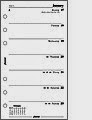
Countless are the ways to configure one’s Filofax personal organizer. I’ve evolved into using the Week on Two Pages diary for noting appointments, birthdays, and any time-sensitive to-dos; two rulers/ page markers; the assorted sticky notes pad (though now with my own, more economical, Post-Its); the address book at the back; plus a “page” of plastic sleeves for business cards. I stash items such as stamps and paperclips in the front inner pocket (especially handy when traveling). Tickets (drycleaners, concerts) go in another pocket. In addition, I made up several tabbed sections to index my personal, financial, business, and other to do / might one day do lists, to which I slap on ideas scribbled on Post-Its as they occur to me. The tabbed sections follow my personal interpretation of David Allen’s Get Things Done  (GTD) system—his basic idea being, capture all your to dos in one “bucket” you regularly revisit, and thereby can clear your mind for more clarity and creativity in the present moment. (To track more complex medium and long-term projects, I use the Projecteze system of a Word.doc table which relies on the sorting feature—that’s another post.)
As for address book, it’s not my main nor my only address book, just the addresses I like to keep handy in this particular system—so, in part, it serves as a paper backup for the most vital addresses, and those I regularly consult when making appointments or sending birthday cards and such.
Usually the Filofax stays open on my desk-- which works for me, but clearly that won’t be ideal for those who work in less private and/or mobile situations. I take it with me when I travel or attend meetings where I might need to review my schedule or consult the to do lists and/or address book. 
High-end stationary, luggage, and department stores often carry the Filofax line of organizers and inserts—as does amazon.com— but to ensure that I get exactly what I want when I want it, I order the refill for the following year from the Filofax USA’s on-line shop on September 1st. At year’s end—following the advice of my tax accountant who says it could be handy in case of an audit—I file the diary with the rest of that year’s tax documents.
There are four major disadvantages to this system. None of them torpedo it for me, but they might for you:
(1) It’s a paper-based system, and for those who want their hand-held and/or laptop to be their all, and the many bells-and-whistles of a cloud-based system, clearly, it’s a head-shaker.
(2) High cost. You get what you pay for, however, and I have been happy to pay for the refills and other accessories because their simple and elegant design inspires me to stay better organized. For those who bristle at such prices, however, it would certainly be possible to make a homemade version of many of the inserts.
(3) Security risk. One’s office or house could burn down or someone could steal the Filofax—but then again, they couldn’t hack into it at 3 in the morning from Uzbekistan, either. 
(4) Bulk and weight. I can easily toss my Filofax into a briefcase or shoulderbag, but without an on-call chiropractor, I wouldn’t want to haul it around on a walk. That said, when I go for a walk, I go for a walk. 
Recommended:


COMMENTS always welcome.